


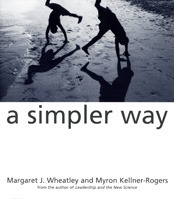
A Simpler Way
Margaret Wheatley (Author) | Myron Kellner-Rogers (Author) | Myron Rogers (Author)
Publication date: 01/01/1998
Bestseller over 75,000+ copies sold
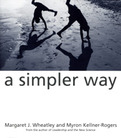
"We want life to be less arduous and more delightful. We want to be able to think differently about how to organize human activities." So begins A Simpler Way, an exploration of a radically different world view that will reshape how we think about organizing all human endeavor.
Margaret J. Wheatley and coauthor Myron Kellner-Rogers explore the question: "How could we organize human endeavor if we developed different understandings of how life organizes itself?" They draw on the work of scientists, philosophers, poets, novelists, spiritual teachers, colleagues, audiences, and their own experience in search of new ways of understanding life and how organizing activities occur. A Simpler Way presents a profoundly different world view that can change how we live our lives and how we can create organizations that thrive.
A Simpler Way explores fundamental new beliefs about organizations and life. Like Leadership and the New Science, this new book is rooted in science but breaks new ground by developing insights from literature, spiritual teachings, and direct experience. The authors challenge many assumptions about life, organizations, and change, while providing inspiration and guidance for readers on their own journey to a simpler way to organize their endeavors.
The authors describe a new paradigm of life as self-organizing and coevolving, drawing on sources that support modern science but predate its findings by thousands of years. They examine five major themes-play, organization, self, emergence, and coherence-each grounded in both the science and philosophy of a world that knows how to organize itself. Each theme is explored in depth, and then applied to how we think about human organizations.
The book begins and ends with photo essays, providing visual imagery that recalls readers to their own experience with a world that is creative, playful, and self-organizing. Written in a relaxed, poetic, and inviting style, the book welcomes the reader into this exploration of a new way of being in the world, one which can give us increased organizing capacity and effectiveness with less of the stress that plagues us now.
Margaret J. Wheatley and coauthor Myron Kellner-Rogers explore the question: "How could we organize human endeavor if we developed different understandings of how life organizes itself?" They draw on the work of scientists, philosophers, poets, novelists, spiritual teachers, colleagues, audiences, and their own experience in search of new ways of understanding life and how organizing activities occur. A Simpler Way presents a profoundly different world view that can change how we live our lives and how we can create organizations that thrive.
A Simpler Way explores fundamental new beliefs about organizations and life. Like Leadership and the New Science, this new book is rooted in science but breaks new ground by developing insights from literature, spiritual teachings, and direct experience. The authors challenge many assumptions about life, organizations, and change, while providing inspiration and guidance for readers on their own journey to a simpler way to organize their endeavors.
The authors describe a new paradigm of life as self-organizing and coevolving, drawing on sources that support modern science but predate its findings by thousands of years. They examine five major themes-play, organization, self, emergence, and coherence-each grounded in both the science and philosophy of a world that knows how to organize itself. Each theme is explored in depth, and then applied to how we think about human organizations.
The book begins and ends with photo essays, providing visual imagery that recalls readers to their own experience with a world that is creative, playful, and self-organizing. Written in a relaxed, poetic, and inviting style, the book welcomes the reader into this exploration of a new way of being in the world, one which can give us increased organizing capacity and effectiveness with less of the stress that plagues us now.
• A BusinessWeek bestseller
• From the author of the bestselling Leadership and the New Science
Formats
Paperback - $29.95 - Members: $26.96
Paperback - $29.95 - Members: $26.96
PDF eBook - $29.95 - Members: $20.97
Find out more about our Bulk Buyer Program
- 10-49: 20% discount
- 50-99: 35% discount
- 100-999: 38% discount
- 1000-1999: 40% discount
- 2000+ Contact Leslie Davis ( [email protected] )
Orders of 10+ copies shipping to one address receive free ground shipping
within the U.S. Shipping to separate individual addresses via USPS media mail will be applied a handling fee:
Book Details
Overview
"We want life to be less arduous and more delightful. We want to be able to think differently about how to organize human activities." So begins A Simpler Way, an exploration of a radically different world view that will reshape how we think about organizing all human endeavor.
Margaret J. Wheatley and coauthor Myron Kellner-Rogers explore the question: "How could we organize human endeavor if we developed different understandings of how life organizes itself?" They draw on the work of scientists, philosophers, poets, novelists, spiritual teachers, colleagues, audiences, and their own experience in search of new ways of understanding life and how organizing activities occur. A Simpler Way presents a profoundly different world view that can change how we live our lives and how we can create organizations that thrive.
A Simpler Way explores fundamental new beliefs about organizations and life. Like Leadership and the New Science, this new book is rooted in science but breaks new ground by developing insights from literature, spiritual teachings, and direct experience. The authors challenge many assumptions about life, organizations, and change, while providing inspiration and guidance for readers on their own journey to a simpler way to organize their endeavors.
The authors describe a new paradigm of life as self-organizing and coevolving, drawing on sources that support modern science but predate its findings by thousands of years. They examine five major themes-play, organization, self, emergence, and coherence-each grounded in both the science and philosophy of a world that knows how to organize itself. Each theme is explored in depth, and then applied to how we think about human organizations.
The book begins and ends with photo essays, providing visual imagery that recalls readers to their own experience with a world that is creative, playful, and self-organizing. Written in a relaxed, poetic, and inviting style, the book welcomes the reader into this exploration of a new way of being in the world, one which can give us increased organizing capacity and effectiveness with less of the stress that plagues us now.
Margaret J. Wheatley and coauthor Myron Kellner-Rogers explore the question: "How could we organize human endeavor if we developed different understandings of how life organizes itself?" They draw on the work of scientists, philosophers, poets, novelists, spiritual teachers, colleagues, audiences, and their own experience in search of new ways of understanding life and how organizing activities occur. A Simpler Way presents a profoundly different world view that can change how we live our lives and how we can create organizations that thrive.
A Simpler Way explores fundamental new beliefs about organizations and life. Like Leadership and the New Science, this new book is rooted in science but breaks new ground by developing insights from literature, spiritual teachings, and direct experience. The authors challenge many assumptions about life, organizations, and change, while providing inspiration and guidance for readers on their own journey to a simpler way to organize their endeavors.
The authors describe a new paradigm of life as self-organizing and coevolving, drawing on sources that support modern science but predate its findings by thousands of years. They examine five major themes-play, organization, self, emergence, and coherence-each grounded in both the science and philosophy of a world that knows how to organize itself. Each theme is explored in depth, and then applied to how we think about human organizations.
The book begins and ends with photo essays, providing visual imagery that recalls readers to their own experience with a world that is creative, playful, and self-organizing. Written in a relaxed, poetic, and inviting style, the book welcomes the reader into this exploration of a new way of being in the world, one which can give us increased organizing capacity and effectiveness with less of the stress that plagues us now.
• A BusinessWeek bestseller
• From the author of the bestselling Leadership and the New Science
About the Authors
Table of Contents