


NEW EDITION, REVISED AND UPDATED
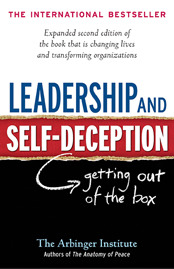
Since its original publication in 2000, Leadership and Self-Deception has become a word-of-mouth phenomenon. Its sales continue to increase year after year, and the book’s popularity has gone global, with editions now available in over twenty languages.
Through a story everyone can relate to about a man facing challenges on the job and in his family, the authors expose the fascinating ways that we can blind ourselves to our true motivations and unwittingly sabotage the effectiveness of our own efforts to achieve success and increase happiness.
This new edition has been revised throughout to make the story even more compelling. And drawing on the extensive correspondence the authors have received over the years, they have added a section that outlines the many ways that readers have been using Leadership and Self-Deception to improve their lives and workplaces—areas such as team building, conflict resolution, and personal growth and development, to name a few.
Read this extraordinary book and discover what millions already have learned—how to consistently tap into an innate ability that dramatically improves both your results and your relationships.
Since its original publication in 2000, Leadership and Self-Deception has become a word-of-mouth phenomenon. Its sales continue to increase year after year, and the book’s popularity has gone global, with editions now available in over twenty languages.
Through a story everyone can relate to about a man facing challenges on the job and in his family, the authors expose the fascinating ways that we can blind ourselves to our true motivations and unwittingly sabotage the effectiveness of our own efforts to achieve success and increase happiness.
This new edition has been revised throughout to make the story even more compelling. And drawing on the extensive correspondence the authors have received over the years, they have added a section that outlines the many ways that readers have been using Leadership and Self-Deception to improve their lives and workplaces—areas such as team building, conflict resolution, and personal growth and development, to name a few.
Read this extraordinary book and discover what millions already have learned—how to consistently tap into an innate ability that dramatically improves both your results and your relationships.
NEW EDITION, REVISED AND UPDATED
Since its original publication in 2000, Leadership and Self-Deception has become a word-of-mouth phenomenon. Its sales continue to increase year after year, and the book’s popularity has gone global, with editions now available in over twenty languages.
Through a story everyone can relate to about a man facing challenges on the job and in his family, the authors expose the fascinating ways that we can blind ourselves to our true motivations and unwittingly sabotage the effectiveness of our own efforts to achieve success and increase happiness.
This new edition has been revised throughout to make the story even more compelling. And drawing on the extensive correspondence the authors have received over the years, they have added a section that outlines the many ways that readers have been using Leadership and Self-Deception to improve their lives and workplaces—areas such as team building, conflict resolution, and personal growth and development, to name a few.
Read this extraordinary book and discover what millions already have learned—how to consistently tap into an innate ability that dramatically improves both your results and your relationships.
Since its original publication in 2000, Leadership and Self-Deception has become a word-of-mouth phenomenon. Its sales continue to increase year after year, and the book’s popularity has gone global, with editions now available in over twenty languages.
Through a story everyone can relate to about a man facing challenges on the job and in his family, the authors expose the fascinating ways that we can blind ourselves to our true motivations and unwittingly sabotage the effectiveness of our own efforts to achieve success and increase happiness.
This new edition has been revised throughout to make the story even more compelling. And drawing on the extensive correspondence the authors have received over the years, they have added a section that outlines the many ways that readers have been using Leadership and Self-Deception to improve their lives and workplaces—areas such as team building, conflict resolution, and personal growth and development, to name a few.
Read this extraordinary book and discover what millions already have learned—how to consistently tap into an innate ability that dramatically improves both your results and your relationships.
Book Details
Overview
NEW EDITION, REVISED AND UPDATED
Since its original publication in 2000, Leadership and Self-Deception has become a word-of-mouth phenomenon. Its sales continue to increase year after year, and the book’s popularity has gone global, with editions now available in over twenty languages.
Through a story everyone can relate to about a man facing challenges on the job and in his family, the authors expose the fascinating ways that we can blind ourselves to our true motivations and unwittingly sabotage the effectiveness of our own efforts to achieve success and increase happiness.
This new edition has been revised throughout to make the story even more compelling. And drawing on the extensive correspondence the authors have received over the years, they have added a section that outlines the many ways that readers have been using Leadership and Self-Deception to improve their lives and workplaces—areas such as team building, conflict resolution, and personal growth and development, to name a few.
Read this extraordinary book and discover what millions already have learned—how to consistently tap into an innate ability that dramatically improves both your results and your relationships.
Since its original publication in 2000, Leadership and Self-Deception has become a word-of-mouth phenomenon. Its sales continue to increase year after year, and the book’s popularity has gone global, with editions now available in over twenty languages.
Through a story everyone can relate to about a man facing challenges on the job and in his family, the authors expose the fascinating ways that we can blind ourselves to our true motivations and unwittingly sabotage the effectiveness of our own efforts to achieve success and increase happiness.
This new edition has been revised throughout to make the story even more compelling. And drawing on the extensive correspondence the authors have received over the years, they have added a section that outlines the many ways that readers have been using Leadership and Self-Deception to improve their lives and workplaces—areas such as team building, conflict resolution, and personal growth and development, to name a few.
Read this extraordinary book and discover what millions already have learned—how to consistently tap into an innate ability that dramatically improves both your results and your relationships.
NEW EDITION, REVISED AND UPDATED
Since its original publication in 2000, Leadership and Self-Deception has become a word-of-mouth phenomenon. Its sales continue to increase year after year, and the book’s popularity has gone global, with editions now available in over twenty languages.
Through a story everyone can relate to about a man facing challenges on the job and in his family, the authors expose the fascinating ways that we can blind ourselves to our true motivations and unwittingly sabotage the effectiveness of our own efforts to achieve success and increase happiness.
This new edition has been revised throughout to make the story even more compelling. And drawing on the extensive correspondence the authors have received over the years, they have added a section that outlines the many ways that readers have been using Leadership and Self-Deception to improve their lives and workplaces—areas such as team building, conflict resolution, and personal growth and development, to name a few.
Read this extraordinary book and discover what millions already have learned—how to consistently tap into an innate ability that dramatically improves both your results and your relationships.
Since its original publication in 2000, Leadership and Self-Deception has become a word-of-mouth phenomenon. Its sales continue to increase year after year, and the book’s popularity has gone global, with editions now available in over twenty languages.
Through a story everyone can relate to about a man facing challenges on the job and in his family, the authors expose the fascinating ways that we can blind ourselves to our true motivations and unwittingly sabotage the effectiveness of our own efforts to achieve success and increase happiness.
This new edition has been revised throughout to make the story even more compelling. And drawing on the extensive correspondence the authors have received over the years, they have added a section that outlines the many ways that readers have been using Leadership and Self-Deception to improve their lives and workplaces—areas such as team building, conflict resolution, and personal growth and development, to name a few.
Read this extraordinary book and discover what millions already have learned—how to consistently tap into an innate ability that dramatically improves both your results and your relationships.
About the Author
Endorsements
Table of Contents
Excerpt
Reviews