




Positive Organizational Scholarship
Foundations of a New Discipline
Kim Cameron (Author) | Jane Dutton (Author) | Robert Quinn (Author)
Publication date: 08/09/2003
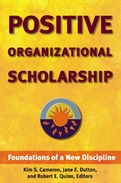
Scholarship establishes a new field of study in the organizational sciences. Just as positive psychology focuses on exploring optimal individual psychological states rather than pathological ones, Positive Organizational Scholarship focuses attention on optimal organizational states --- the dynamics in organizations that lead to the development of human strength, foster resiliency in employees, make healing, restoration, and reconciliation possible, and cultivate extraordinary individual and organizational performance.
While the concept of positive organizational scholarship encompasses the examination of typical and even dysfunctional patterns of behavior, it emphasizes positive deviance from expected patterns. Positive Organizational Scholarship examines the enablers, motivations, and effects associated with remarkably positive phenomena --- how they are facilitated, why they work, how they can be identified, and how researchers and managers can capitalize on them. The contributors do not adopt one particular theory or framework but draw from the full spectrum of organizational theories to understand, explain, and predict the occurrence, causes, and consequences of positivity.
Positive Organizational Scholarship rigorously seeks to understand what represents the best of the human condition based on scholarly research and theory. This book invites organizational scholars to build upon and extend the positive organizational phenomena being examined. It provides the definitional, theoretical, and empirical foundations for what will become a cumulative body of enduring work.
While the concept of positive organizational scholarship encompasses the examination of typical and even dysfunctional patterns of behavior, it emphasizes positive deviance from expected patterns. Positive Organizational Scholarship examines the enablers, motivations, and effects associated with remarkably positive phenomena --- how they are facilitated, why they work, how they can be identified, and how researchers and managers can capitalize on them. The contributors do not adopt one particular theory or framework but draw from the full spectrum of organizational theories to understand, explain, and predict the occurrence, causes, and consequences of positivity.
Positive Organizational Scholarship rigorously seeks to understand what represents the best of the human condition based on scholarly research and theory. This book invites organizational scholars to build upon and extend the positive organizational phenomena being examined. It provides the definitional, theoretical, and empirical foundations for what will become a cumulative body of enduring work.
- Path-breaking scholarly volume exploring the dynamics in organizations that lead to extraordinary individual and organizational performance
- Establishes a new field of study in the social sciences
- Offers practical guidance for managers, as well as a future research agenda for understanding and enabling positive organizational behavior
Formats
PDF eBook - $55.00 - Members: $38.50
PDF eBook - $55.00 - Members: $38.50
Find out more about our Bulk Buyer Program
- 10-49: 20% discount
- 50-99: 35% discount
- 100-999: 38% discount
- 1000-1999: 40% discount
- 2000+ Contact ( [email protected] )
Orders of 10+ copies shipping to one address receive free ground shipping
within the U.S. Shipping to separate individual addresses via USPS media mail will be applied a handling fee:
Book Details
Overview
Scholarship establishes a new field of study in the organizational sciences. Just as positive psychology focuses on exploring optimal individual psychological states rather than pathological ones, Positive Organizational Scholarship focuses attention on optimal organizational states --- the dynamics in organizations that lead to the development of human strength, foster resiliency in employees, make healing, restoration, and reconciliation possible, and cultivate extraordinary individual and organizational performance.
While the concept of positive organizational scholarship encompasses the examination of typical and even dysfunctional patterns of behavior, it emphasizes positive deviance from expected patterns. Positive Organizational Scholarship examines the enablers, motivations, and effects associated with remarkably positive phenomena --- how they are facilitated, why they work, how they can be identified, and how researchers and managers can capitalize on them. The contributors do not adopt one particular theory or framework but draw from the full spectrum of organizational theories to understand, explain, and predict the occurrence, causes, and consequences of positivity.
Positive Organizational Scholarship rigorously seeks to understand what represents the best of the human condition based on scholarly research and theory. This book invites organizational scholars to build upon and extend the positive organizational phenomena being examined. It provides the definitional, theoretical, and empirical foundations for what will become a cumulative body of enduring work.
While the concept of positive organizational scholarship encompasses the examination of typical and even dysfunctional patterns of behavior, it emphasizes positive deviance from expected patterns. Positive Organizational Scholarship examines the enablers, motivations, and effects associated with remarkably positive phenomena --- how they are facilitated, why they work, how they can be identified, and how researchers and managers can capitalize on them. The contributors do not adopt one particular theory or framework but draw from the full spectrum of organizational theories to understand, explain, and predict the occurrence, causes, and consequences of positivity.
Positive Organizational Scholarship rigorously seeks to understand what represents the best of the human condition based on scholarly research and theory. This book invites organizational scholars to build upon and extend the positive organizational phenomena being examined. It provides the definitional, theoretical, and empirical foundations for what will become a cumulative body of enduring work.
- Path-breaking scholarly volume exploring the dynamics in organizations that lead to extraordinary individual and organizational performance
- Establishes a new field of study in the social sciences
- Offers practical guidance for managers, as well as a future research agenda for understanding and enabling positive organizational behavior
About the Authors
Table of Contents
We also recommend