



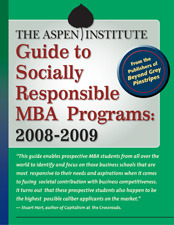
Aspen Institute Guide to Socially Responsible MBA Programs: 2008-2009
Aspen Institute (Author)
Publication date: 06/23/2008
Premier CSR organization Aspen Institute offers nation’s first comprehensive guide to the world’s leading global MBA programs in CSR—an indispensable guide for prospective students, universities, hiring companies, and libraries
The Aspen Institute, a premier non-profit, research organization for corporate social responsibility, offers the first comprehensive guide to the world’s leading global MBA programs in CSR—an indispensable guide for prospective students, universities, hiring companies, and libraries.
This guide provides an overview of how global MBA programs bring social impact management into their curricular and extracurricular programs. Social impact management, which includes environmental, ethical, and corporate governance issues, is the field of inquiry at the intersection of business needs and wider societal concerns that reflects their complex interdependency. Without an understanding of this interdependency, neither business nor the society in which it operates can thrive.
Each year business schools from around the world strive to differentiate themselves and attract the best and the brightest future business leaders, while prospective MBAs are looking for a program that will provide effective management skills to succeed in the changing face of business. The bottom line is no longer exclusively dedicated to financial returns. Rather, business leaders must also consider the environmental and social impacts of their decisions in order to compete in today’s marketplace. The MBA schools that participate in the Aspen Institute’s survey, and are therefore highlighted in the Aspen Institute Guide for Socially Responsible MBA Programs: 2008-2009, are leaders in integrating these issues into their MBA curricula.
Formats
Paperback - $37.95 - Members: $34.16
Paperback - $37.95 - Members: $34.16
PDF eBook - $14.95 - Members: $10.47
Find out more about our Bulk Buyer Program
- 10-49: 20% discount
- 50-99: 35% discount
- 100-999: 38% discount
- 1000-1999: 40% discount
- 2000+ Contact ( [email protected] )
Orders of 10+ copies shipping to one address receive free ground shipping
within the U.S. Shipping to separate individual addresses via USPS media mail will be applied a handling fee:
Book Details
Overview
Premier CSR organization Aspen Institute offers nation’s first comprehensive guide to the world’s leading global MBA programs in CSR—an indispensable guide for prospective students, universities, hiring companies, and librariesThe Aspen Institute, a premier non-profit, research organization for corporate social responsibility, offers the first comprehensive guide to the world’s leading global MBA programs in CSR—an indispensable guide for prospective students, universities, hiring companies, and libraries.
This guide provides an overview of how global MBA programs bring social impact management into their curricular and extracurricular programs. Social impact management, which includes environmental, ethical, and corporate governance issues, is the field of inquiry at the intersection of business needs and wider societal concerns that reflects their complex interdependency. Without an understanding of this interdependency, neither business nor the society in which it operates can thrive.
Each year business schools from around the world strive to differentiate themselves and attract the best and the brightest future business leaders, while prospective MBAs are looking for a program that will provide effective management skills to succeed in the changing face of business. The bottom line is no longer exclusively dedicated to financial returns. Rather, business leaders must also consider the environmental and social impacts of their decisions in order to compete in today’s marketplace. The MBA schools that participate in the Aspen Institute’s survey, and are therefore highlighted in the Aspen Institute Guide for Socially Responsible MBA Programs: 2008-2009, are leaders in integrating these issues into their MBA curricula.
About the Author