Identifies surprising new leadership skills vital to coping with today's uncertain, rapidly changing world.
Identifies surprising new leadership skills vital to coping with today's uncertain, rapidly changing world
Includes exercises and assessments for developing and applying these skills
A fully updated and revised edition of a book adopted by leaders at Procter & Gamble, Target, McDonalds, Electronic Arts, UPS, Kraft, and many other companies
We are in a time of disruptive change-traditional leadership skills won't be enough, noted futurist Bob Johansen argues. Drawing on the latest ten-year forecast from the Institute for the Future-the only futures think tank ever to outlive its forecasts-this powerful book explores the external forces that are shaking the foundations of leadership and unveils ten critical new skills that will be required in the future, skills that you can learn.
In this second edition, Johansen is joined by the prestigious Center for Creative Leadership. CCL's contributions help readers understand the new leadership skills by linking them to existing skills, and they provide analytics and exercises so readers can develop these new skills.
This edition has been updated throughout, with a new ten-year forecast and new examples, and incorporates the lessons Johansen has learned about applying the new leadership skills in the three years since the first edition appeared. In addition, Johansen deals with two new forces that are shaping the future. The first is the "digital natives"-people fifteen years and younger who have grown up in a completely digital world. The second is cloud-based supercomputing, which will enable new forms of connection, collaboration, and commerce and will greatly facilitate reciprocity-based innovation-giving away to get more-which Johansen sees as the biggest innovation opportunity in history.
Identifies surprising new leadership skills vital to coping with todays uncertain, rapidly changing world
Includes exercises and assessments for developing and applying these skills
A fully updated and revised edition of a book adopted by leaders at Procter & Gamble, Target, McDonalds, Electronic Arts, UPS, Kraft, and many other companies
We are in a time of disruptive changetraditional leadership skills wont be enough, noted futurist Bob Johansen argues. Drawing on the latest ten-year forecast from the Institute for the Futurethe only futures think tank ever to outlive its forecaststhis powerful book explores the external forces that are shaking the foundations of leadership and unveils ten critical new skills that will be required in the future, skills that you can learn.
In this second edition, Johansen is joined by the prestigious Center for Creative Leadership. CCLs contributions help readers understand the new leadership skills by linking them to existing skills, and they provide analytics and exercises so readers can develop these new skills.
This edition has been updated throughout, with a new ten-year forecast and new examples, and incorporates the lessons Johansen has learned about applying the new leadership skills in the three years since the first edition appeared. In addition, Johansen deals with two new forces that are shaping the future. The first is the digital nativespeople fifteen years and younger who have grown up in a completely digital world. The second is cloud-based supercomputing, which will enable new forms of connection, collaboration, and commerce and will greatly facilitate reciprocity-based innovationgiving away to get morewhich Johansen sees as the biggest innovation opportunity in history.
Identifies surprising new leadership skills vital to coping with today's uncertain, rapidly changing world.
Identifies surprising new leadership skills vital to coping with today's uncertain, rapidly changing world
Includes exercises and assessments for developing and applying these skills
A fully updated and revised edition of a book adopted by leaders at Procter & Gamble, Target, McDonalds, Electronic Arts, UPS, Kraft, and many other companies
We are in a time of disruptive change-traditional leadership skills won't be enough, noted futurist Bob Johansen argues. Drawing on the latest ten-year forecast from the Institute for the Future-the only futures think tank ever to outlive its forecasts-this powerful book explores the external forces that are shaking the foundations of leadership and unveils ten critical new skills that will be required in the future, skills that you can learn.
In this second edition, Johansen is joined by the prestigious Center for Creative Leadership. CCL's contributions help readers understand the new leadership skills by linking them to existing skills, and they provide analytics and exercises so readers can develop these new skills.
This edition has been updated throughout, with a new ten-year forecast and new examples, and incorporates the lessons Johansen has learned about applying the new leadership skills in the three years since the first edition appeared. In addition, Johansen deals with two new forces that are shaping the future. The first is the "digital natives"-people fifteen years and younger who have grown up in a completely digital world. The second is cloud-based supercomputing, which will enable new forms of connection, collaboration, and commerce and will greatly facilitate reciprocity-based innovation-giving away to get more-which Johansen sees as the biggest innovation opportunity in history.
Identifies surprising new leadership skills vital to coping with todays uncertain, rapidly changing world
Includes exercises and assessments for developing and applying these skills
A fully updated and revised edition of a book adopted by leaders at Procter & Gamble, Target, McDonalds, Electronic Arts, UPS, Kraft, and many other companies
We are in a time of disruptive changetraditional leadership skills wont be enough, noted futurist Bob Johansen argues. Drawing on the latest ten-year forecast from the Institute for the Futurethe only futures think tank ever to outlive its forecaststhis powerful book explores the external forces that are shaking the foundations of leadership and unveils ten critical new skills that will be required in the future, skills that you can learn.
In this second edition, Johansen is joined by the prestigious Center for Creative Leadership. CCLs contributions help readers understand the new leadership skills by linking them to existing skills, and they provide analytics and exercises so readers can develop these new skills.
This edition has been updated throughout, with a new ten-year forecast and new examples, and incorporates the lessons Johansen has learned about applying the new leadership skills in the three years since the first edition appeared. In addition, Johansen deals with two new forces that are shaping the future. The first is the digital nativespeople fifteen years and younger who have grown up in a completely digital world. The second is cloud-based supercomputing, which will enable new forms of connection, collaboration, and commerce and will greatly facilitate reciprocity-based innovationgiving away to get morewhich Johansen sees as the biggest innovation opportunity in history.
About the Authors
Robert Johansen (Author)
Bob Johansen has been helping organizations around the world prepare for and shape the future for more than thirty years. The New Leadership Literacies is Bob's eleventh book. He is a frequent keynote speaker for large groups and leads a wide range of workshops with rising-star leaders.
As a distinguished fellow at IFTF, Bob draws on his training in the social sciences and his extensive experience at the edges of multiple disciplines as he interacts with top leaders of business, government, and nonprofit organizations to encourage thoughtful consideration of the long-term future. His most recent book, the second edition of Leaders Make the Future: Ten New Leadership Skills for an Uncertain Age, has contributions from the Center for Creative Leadership. Connect Consulting Group named this book on change management and leadership as the best business book of 2012. Bob has done workshops based on his books at a wide range of corporations, including P&G, Kellogg's, Disney, Intel, Walmart, Syngenta, Johnson & Johnson, UPS, McKinsey, General Mills, and McDonald's. Major universities, nonprofits, and churches also use his books.
Born in Geneva, Illinois, Bob holds a BS from the University of Illinois, where he attended on a basketball scholarship and channeled his unrealistic desire to be a professional athlete. He received a PhD from Northwestern University, where he was introduced to the Internet (then called the ARPANet) as it was just coming to life. In addition, Bob has a divinity school degree from Crozer Theological Seminary, where he began his lifelong interest in world religions, ethics, and things spiritual. Bob was the president of the Institute for the Future for eight years and founded its program of research on emerging technology horizons.
Bob is married to Robin B. Johansen, an attorney practicing constitutional law. They have two children and three grandchildren.
Bob Johansen (Author)
Bob Johansen is a distinguished fellow at the Institute for the Future in Silicon Valley, where he helps top leaders around the world prepare for and shape the future. He works with corporations such as McKinsey, Tesco, UPS, Kellogg, Disney, and McDonald’s—as well as major universities and nonprofits. This is Bob’s ninth book.
Endorsements
“Bob Johansen's thesis that we, as business leaders, can create and guide our own future in a competitive and ever-changing marketplace has permeated throughout our organization at Scripps Networks Interactive. In Leaders Make the Future he takes his thesis to the next level, providing readers with a wise and thought-provoking guide to success in a changing world. It's going to be a must-read at our company.” —Kenneth W. Lowe, Chairman, President, and CEO, Scripps Networks Interactive, Inc. “The first edition of Leaders Make the Future opened new vistas for visionary leaders and provided a road map for them. The second edition creates urgency to develop skill sets necessary to lead by describing the time compression of change and the resulting dynamic interdependencies of the complexity of the changes. These complexities not only require flexible and agile responses but also describe a world in which new measurements are required. These measurements can best be determined using a combination of learning from the social sciences combined with analytical applications or in a sense a set of social differential equations.” —Alfred A. Plamann, CEO, Unified Grocers, Inc. “Bob Johansen focuses on how leaders can make decisions and perform when the pace of decision making and its consequences in our interdependent world have never been greater. Leaders Make the Future provides an analytical and operational framework for decision making in the VUCA soup.” —Thomas H. Glocer, former CEO, Thomson Reuters “At EA University, we rock with the excitement and dangers of volatile and uncertain futures for our industry. Heck, for our whole world! We use Bob Johansen's concepts and future capabilities in preparing our high-potential leaders for this future. If there is uncertainty in your future, you will want your leaders reading this book.” —Andy Billings, Vice President, Profitable Creativity, EA University, Electronic Arts “Leaders Make the Future is required reading for my students and essential reading for all interested in a better world and social profit. It is concise, readable, understandable, useful, necessary, replete with examples relevant to now and to tomorrow's world, and applicable to both career and daily life.” —Linda Golden, Marlene and Morton Meyerson Centennial Professor in Business, McCombs School of Business, University of Texas at Austin “Leaders Make the Future applies the maker mind-set to leadership. The best leaders in the future will also be makers.” —Dale Dougherty, founder, MAKE magazine and Maker Faire
“Bob Johansen offers clear and inspiring guideposts to deal with profound leadership challenges that face us in the 21st century. Leaders take note: you will need both strategy and learning, expressed with great clarity. This book is an important call to action." —Willie Pietersen, Professor of the Practice of Management, Columbia Business School “Kudos to Bob Johansen for this revised edition of Leaders Make the Future! Not only can the leadership skills Bob outlines be applied toward producing effective leaders, but they are excellent for promoting happier, healthier ones too!” —Kelly Traver, MD, CEO and founder, Healthiest You “Having lived and worked with the future for almost forty years, the Institute for the Future's Bob Johansen returns to the present and shares his key insights on how leaders can move their organizations forward. If you want to thrive in the future—or even create your own—then reading this book will be time well spent.” —Tom Kelley, General Manager, IDEO, and author of The Ten Faces of Innovation
“We find the unique perspective that Bob illustrates in this book incredibly important as we prepare our top leaders for the future.” —David Small, Vice President, Global Talent Management and Leadership Institute, McDonald's Corporation “Bob Johansen has made Leaders Make the Future even better since anticipating the economic meltdown in 2008 and closely tracking events since then. By asking what skills leaders will need, working backward from future-shaping forces he and the Institute for the Future have identified, he offers a fresh and important call to action. The book is full of practical advice from watching Silicon Valley's booms, busts, and recoveries for more than three decades.” —David Sibbet, President, Grove Consultants International, and author of Visual Meetings and Visual Teams “Johansen offers steps to strengthen our skills as well as insights to inspire us to build a better future. It is the must-read partner to his other recent book, Get There Early.” —Jean McClung Halloran, Senior Vice President, Human Resources, Agilent Technologies
Table of Contents
List of Figures
Foreword to the Second Edition
Preface to the Second Edition
Introduction: Listening for the Future
Chapter 1: Maker Instinct
Chapter 2: Clarity
Chapter 3: Dilemma Flipping
Chapter 4: Immersive Learning Ability
Chapter 5: Bio-Empathy
Chapter 6: Constructive Depolarizing
Chapter 7: Quiet Transparency
Chapter 8: Rapid Prototyping
Chapter 9: Smart-Mob Organizing
Chapter 10: Commons Creating
Chapter 11: Future Immersion for Leadership Development
Chapter 12: Learning the Ten Future Leadership Skills Yourself
Notes
Bibliography
Acknowledgments
Index
About the Author
About IFTF
About CCL
Excerpt
Leaders Make the Future
1
Maker Instinct
Ability to exploit your inner drive to build and grow things,
as well as connect with others in the making.
YOU HAVE NO CHOICE about whether or not to have maker instinct; everyone has it. You can choose, however, whether or not to let your maker instinct lie dormant or express itself. Leaders can choose whether or not to encourage people in their organizations to express their maker instinct.
The instinct to make is built into our language and ways of seeing the world. Ponder this long—but still only partial—list of maker idioms in daily use all around us:
• Making sense
• Making time
• Making money
• Making ends meet
• Making peace
• Making love
• Making war
• Making hay
• Making work
• Making waves
• Making every effort
• Making music
• Making fun
• Making light of things
• Making blood run cold
• Making certain
• Making contact
• Making clear
• Making a fool out of someone
• Making friends
• Making concessions
• Making calm
• Making common cause with
• Making history
• Make my day
The maker instinct is everywhere. The challenge is to turn the universal urge to make into a leadership skill, to synchronize the maker instinct of leaders with maker instinct of others. Many people don’t realize their own maker instinct and potential. It must be recognized, valued, and nurtured if it is to become a leadership skill for the future. The maker instinct is key to making the future.
Beyond do-it-yourself, leaders need to nurture do-it-ourselves. The maker instinct must be amplified by connectivity.
When I go into a new company, I like to ask leaders about their hobbies. If they have complex, exotic, time-consuming hobbies, it may mean that their maker instinct is not being fully expressed at work. Perhaps the organization is operating at a routine level that does not demand deep engagement and does not tap the maker instinct of its leaders.
I remember meeting one top engineering executive for a very large corporation who rebuilt old steam engines in his spare time. Building steam engines is a great hobby, but this executive was overdosing: he had fields (literally fields) of steam engines that he was in the process of rebuilding. As I learned more about his company and his role, I realized that his corporate culture did not tap into the maker instinct. Rather, the leaders in that company tended to do what they had to do at work, then go home to do what they wanted to do. They had created a culture of discipline focused on good management, but they were not tapping the maker instinct and channeling it into leadership. This company was emphasizing management at the expense of leadership. Employees expressed their maker instinct at home, often through exotic time-consuming hobbies.
I’m certainly not against hobbies, but I am against leadership roles that focus on telling people what to do, and following the rules, rather than requiring people to get personally involved in how things work and how they could be improved.
Another example: some public speakers like to arrive, give a speech, and leave. They have no interest in the group process that was unfolding before they arrived and will continue after they depart. On the other hand, makers like to see how ideas develop and unfold—and they like to be able to influence how that happens. Leaders need to get involved in the messiness of group process to understand the context and underlying relationships. The speak-and-run approach may be considered leadership on the speaking agent circuit, but that’s not group leadership. The best speakers strive to figure out how things work and what a group needs, not just give their usual talk and go.
The maker instinct is basic and precedes all other skills that will be needed for future leadership. The roots of the maker instinct run deep. Go to any beach in the world and you see kids digging in the sand. Why do they dig holes and build sand castles? These young makers are honing their maker instinct. My guess is that most successful leaders were very ambitious excavators when they were kids. Leaders are makers by definition. Leaders make organizations with an energy similar to the one kids employ to make castles in the sand. Leaders create the circumstances under which high-performing organizations become possible.
The leaders of the future will be less controlling than those of the past. They will be more engaged with others, since connectivity will be required to make the future. Everyone is part of a network. Leaders are nodes, and the best ones are hubs that form, nurture, and grow networks that stretch far beyond themselves.
My dad was a maker. To relax, he would go to the basement by himself, where he always had several projects in progress. He read Popular Mechanics, a magazine that aroused the maker instinct in readers every month with outrageous but inspiring projects like gliders you could pull behind a car. Dad had a large Shopsmith multi-purpose woodworking machine—a frightening contraption that loomed behind our furnace. I learned as a child that this awe-inspiring machine was dangerous and that I should stay away unless I myself learned how to become a maker. It was not easy for me to learn woodworking skills, and I never became nearly as good as my dad. However, thanks to his wisdom as a Cub Scout leader, I still have a serving tray that I made at a Cub Scout meeting using discarded records from a local radio station and imprinting circular patterns on them with a spinning wire brush. Actually each of us Cub Scouts spent only a short time pressing scratchy circles into the disc. When we returned the next week, my dad had almost finished each project—except for the last few circles and crimping the edges. I still feel like I made that tray—thanks to my Dad. He made it easy for me to satisfy my early urge to make, giving me lots of advice while he watched over me so I didn’t get hurt. The lurking Shopsmith in our basement, like the maker instinct itself, was both attractive and imposing.
My dad was a solo maker, working alone in our basement. In the future, solo makers will still be around, but networks of makers will be much more powerful. The maker instinct is solitary, but leaders will need to connect their maker energy to others in order to fuel change. Makers have always been interested in sharing what they make with others and the new media tools will facilitate this urge.
My mom had a maker instinct as well. She loved to sew and then to knit. She made clothes for my sister and me, though I didn’t appreciate them until I got older. At our church, my mom and grandmother would go to sewing circles where people would talk as they sewed or knitted. Late in her life, my grandmother became part of the Leisure League at church, a group that made clothing for people in developing countries. She loved the making, but the fact that others valued her products and found them useful gave meaning to her making. Making things was a big part of my grandmother’s identity at each stage of her life, even as the things that she made changed. Everyone has a maker instinct, but it can play out in many different ways with different people. The maker instinct is widespread, but it will be even more so in the future.
MAKE: Magazine is a modern reinvention of Popular Mechanics and the other maker magazines of that era. Its founder, Dale Dougherty, is well aware of the historical roots of his magazine and what he refers to as the “maker mindset.” In honor of those roots, MAKE the magazine is exactly the same size in its paper version as Popular Mechanics, Popular Science, and the other do-it-yourself magazines that were popular thirty years ago. Makers tend to respect their roots, and many makers have deep roots.
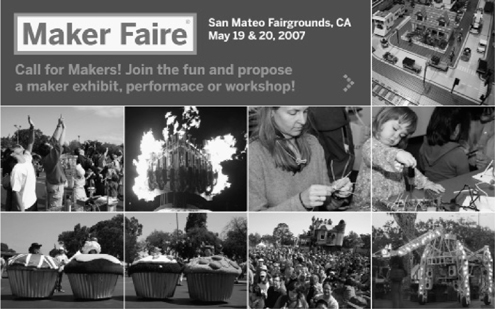
The annual Maker Faire now draws more than 100,000 people to the San Mateo Expo Center to share what they’ve made and admire what others have made. The Maker Faire continues to spin off other maker efforts, such as TechShop and Instructables. TechShop (http://techshop.ws/) is a kind of monthly membership club for makers.
Instructables, recently acquired by Autodesk, is an online sharing medium for makers. It has an elegantly simple interface to allow makers to explain how they make things and how others can do what they did.1
Maker instinct is kind of a DNA imprint that we all carry in our own ways. MAKE: Magazine, the Maker Faire, TechShop, and Instructables are profound signals that indicate a very important direction for the future. The rebirth of the maker instinct will remake the future of leading.
Maker Instinct Defined
The maker instinct is an inner drive to build and grow things. The maker instinct is deeply human and organic, even though the things that people make are often machines or mechanical. Certainly, the maker instinct can be expressed in growing and farming as well as making stuff. The key here is the instinct to make, not what is made. Leaders with maker instinct have a constant desire to improve the organizations around them. Both managers and leaders ask how things work, but leaders have an urge to make things work better.
When I was a Little League Baseball manager for my son’s team, my maker instinct urged me to juggle the lineup to try out different batting orders for maximum effect. Actually, it was for what I thought was maximum effect but, in the case of my baseball managing skills, I was usually wrong. Still, my maker instinct persisted.
The popular Kevin Costner movie Field of Dreams is a romantic baseball fantasy around a maker theme: “If you build it, they will come.” He made a baseball field in the middle of an Iowa cornfield and a miracle happened. True, the Costner character was idealistic and unrealistic, but he also had an overwhelming maker urge that just had to be expressed. I suspect that everyone who watched that movie feels that he was right to follow the maker urge.
Makers like to be hands-on and see things from the inside. The MAKE: Magazine motto is “If you can’t open it, you don’t own it.” Open means transparent and accessible, but it also means able to be altered, customized, or personalized. Think about how that maxim has major implications for today’s manufacturers, many of whom do not want you to open their products and will void your warranty if you do. Of course, the specifics of how consumers are allowed to “open” a product are critical. The Toyota Scion, for example, is designed to be customized, but that doesn’t mean that everything about the Scion is open. Manufacturers must decide what they can open, while still owning what they can own that gives them an advantage. This is not an either/or choice. The clear direction of change, however, is from more closed to more open. This does not mean, however, that intellectual property will go away. It will be a very messy process of change over the next decade and beyond.
Leaders will grow, regrow, and reimagine their own organizations again and again. The maker instinct fuels that growth. Leaders will make the future in the context of the external future forces of the next decade.
Maker Instinct Meets the Future
In the future, personal empowerment will mean that customization and personalization will be desired and often demanded. Even global products will need to feel local, or at least not feel foreign. Grassroots economic systems like eBay will make bottom-up financial transactions possible. Smart networking will create results that will not be predictable but will be profound.
DIASPORAS OF MAKERS WILL GROW
At the 2008 Maker Faire, IFTF gave visitors inexpensive video recorders and asked them to go out and gather stories from the makers. They brought back accounts of the maker instinct at work. For example, a twenty-foot-high electric giraffe named Russell created quite a stir rolling around the fair. Russell cost its maker $20,000 plus lots of time to build it—but it was a priceless family experience for the makers. Colorful cupcakes, each one accommodating a single rider, rolled around the grounds in wandering paths. Two liquid sculptors dropped Mentos candies into Diet Coke bottles to create patterns of spray.
Computer giant and master maker Steve Wozniak spoke at the second Maker Faire and commented that the spirit of Maker Faire reminded him of the early days of the personal computer. Many of today’s makers are out to create new products or services, but others are just out to have a good time. Makers are coming together in new ways that are likely to have profound impacts on leadership in the future.
Nowhere is the maker instinct burning more than in the world of design and digital art. As the demand to create increases, companies are making a move toward more accessible products. Autodesk, Inc. sells engineering and design software—very expensive software for very specialized engineers and designers. Over the past thirty years, this international company has built a customer base of 12 million. In 2009, Autodesk launched Sketchbook, a $1.99 iPhone and iPad application that attracted 7 million new global users in only two years. Autodesk anticipated the growth of the maker instinct and was able to respond with software that reached a much larger community of makers—professional and amateur.
Maker communities, as showcased at the Maker Faire, are often diasporas linked by strong, shared values and sometimes a common place—physical or virtual—where its members feel at home. Many of these communities are bound together by ideals about how their work should be practiced, or where their craft was born. Maker diasporas believe passionately in what they are making and how it is made. They often want to spread their word and share their truth. The annual Maker Faire is a vibrant gathering of makers shouting out to a wide array of other makers and celebrants of all ages. Although showing off is part of it, far more is going on.
Sometimes there is a strong bond among makers that stretches back in time and forward. Leaders share stories that keep maker traditions alive and draw in new members. Makers have the skills to make the world a better place, but they often don’t know it. They just build what gives them pleasure, but leaders will know how to tap that maker energy as a force for change.
Shared energy is what diasporas are all about. The maker instinct will feed right into diasporic energy that will be amplified by social media. As these new groundswells of grassroots innovation disrupt traditional patterns, however, traditional organizations are likely to be confused about what to do. For example, both Mentos and Coca-Cola threatened to sue the artists whom they claimed were misusing their products by dropping Mentos into Diet Coke and creating massive displays of fizz. A short while later, both companies realized that lawsuits were unlikely to be successful and were likely to be unpopular with consumers. With some consternation but great consumer insight, both companies dropped their lawsuits and decided to sponsor the artists. Makers learn from those who use their products and services, and they learn even more when they encourage people to use them in ways that the manufacturer never imagined.
Solo makers, like my dad in our basement, are evolving into networked artisans through gatherings like the Maker Faire. Makers love to show and tell. Instructables allows makers to meet virtually and share projects. The original banner on the Instructables home page refers to itself as “The World’s Largest Show and Tell.”1 Maker messages will circulate very rapidly within and among maker diasporas. Products will be turned into stories, and the stories will spread like viruses on maker blogs and a wild mix of other social media.
MAKERS WILL CREATE SHARED SPACES
One leadership dilemma that I will discuss in more detail in Chapter 10: Commons Creating is how to intelligently give things away without putting your own organization at a disadvantage. Your competitors don’t necessarily need to lose in order for you to win. Open-source logic teaches that it can be good to give away ideas if there is a good chance that you will get back even better ideas in return. This logic is counterintuitive for many leaders, but those who tap into the maker instinct understand this concept much more readily than those whose maker instincts were repressed in large corporations. Makers easily access the wisdom they have learned from their hobbies and from others to help them with the demands of their jobs. Makers tend to like giving things away.
At the 2008 Maker Faire, for example, Jimmy Smith from Team FredNet talked about the Google Lunar X Prize, which was awarded to the team that could land a rover on the surface of the moon. FredNet used only off-the-shelf products. They shared their activities with everyone, including their competitors. Thus a new zone was created within which competitors could pool their resources in order to achieve the ultra-ambitious goal of landing a rover on the moon. This logic challenges traditional assumptions about competition. You divulge information to competitors? Yes, in pursuit of the prize there is sharing, but competition continues beyond that base of information.
Corporations used to think of research and development (R&D) as something that happens inside big laboratories and gradually gets released to the people who use the products. In the future, much of the innovation will come from backyards, basements, and kitchens of those guided by their own maker instinct—in both developed and (especially) developing worlds. At the edges of traditional R&D—and even far beyond the edges—corporate-mandated methods are giving way to maker-inspired grassroots innovation. Central corporate R&D will still exist, but it will be more open and network savvy. Threadless, for example, is a T-shirt maker that holds a design competition in which consumers compete and vote on the designs. Those that get the highest ratings get manufactured. The Threadless model may be extreme, but it suggests the direction of change. Makers can be the inspiration for future products.
MAKERS AND THE TOOLS OF WARFARE
When I started out as a forecaster in the early 1970s, many leading-edge information technologies were developed within the Advanced Research Projects Agency (ARPA), which created the ARPAnet, the precursor to the Internet. Gradually, innovations that were classified as military secrets made their way to public use in everyday life. In just the thirty-five-year period of my career, this pattern has reversed. Now, the leading-edge tools are coming from consumer electronics, video gaming, and makers. Even the tools of war are coming from everyday products adapted with a mix of maker ingenuity and anger. The most sophisticated roadside bombs used in insurgent warfare, for example, come from consumer electronic and cell phone technologies—not from sophisticated, big technology innovation developed inside massive defense establishments. Insurgent makers are everywhere—on the battlefield and behind the scenes. Gradually, these innovations make their way back to the military industrial complex. The maker instinct will have both positive and negative results. In a world of asymmetric warfare, innovation happens from the bottom up—fueled by their own kind of destructive maker energy. Enemies (and potential collaborators) can come together any place and any time. Terrorist networks tend to be organizationally sophisticated, and they know how to make their own weapons. The maker instinct is often very strong within dangerous mobs, and it is likely to grow in the future. Access to tools has improved for the bad guys as well as for the good guys, and sometimes it will be difficult to tell which is which. Makers, alas, can be thieves, vandals, or killers—even as the positive energy of events like the Maker Faire continues to grow.
MAKERS IN THE MARKETPLACE
Global climate disruption and an ecosystem that is clearly at risk will continue to be concerns in the next decade. Meanwhile, a new generation of makers is coming of age. Stimulated by the first round of ecological thinking in the late ’60s and early ’70s, schools provided students with a strong dose of environmental education. These next generation makers are more likely to be eco-motivated and guided by a new mantra to reduce, reuse, and remake. Remaking will be even more important for this new generation of eco-makers than making. Their exchanges will grow into marketplaces for goods and services.
Etsy.com, for example, is an online marketplace for makers to buy and sell. Swapthing.com is a sort of eBay for people who want to trade rather than buy. Both Etsy and SwapThing are indicative of this new generation of makers who want to reuse more and consume less. They salvage what they can and redesign existing products for new applications. They suggest that there are alternatives to just buying more stuff. Green aspirations will translate into a bottom-up economy of makers who are skeptical about big corporations and planned obsolescence. Maker gatherings already tend to be green, and they are likely to get much greener in the future. People want green energy, and corporations are made of people. These makers are likely to seed shifts within large corporations as well as within communities. They will swap, build, and rebuild.
MAKERS IN THE FOOD WEB
Food has always been an interesting medium for expressing the maker instinct. The best kitchens are designed for makers, with as much elegance and creativity as the cook (aka maker) would like. In the always-busy world of the future, the desire to prepare meals will be tempered by time. Although people want to be involved in making food for themselves and their families, they won’t have hours to invest in cooking. Expect food retailers to respond with approaches to cooking that will allow people to participate in meal preparation, thus providing the psychological satisfaction of making their own food, without requiring the time to do so from scratch.
Founded by some of the team from Wired magazine, TCHO is a high-tech chocolate company in San Francisco, based on the idea of chocolate as a creative medium, with many different customization options. Customers are involved in creating their own chocolate without having to make it themselves. Consider how the maker instinct plays out at TCHO, based on how they describe themselves in these selections from their home page. Makers are often obsessed, very obsessed. Their customers can benefit from that obsession, as is clear from their principles:
TCHO is where technology meets chocolate; where Silicon Valley start-up meets San Francisco food culture.
TCHO is an innovative method for you to discover the chocolate you like best.
TCHO is scrappy and high-tech—recycling and refurbishing legacy chocolate equipment and mating it with the latest process control, information, and communications systems.
TCHO’s social mission is the next step beyond Fair Trade—helping farmers by transferring knowledge of how to grow and ferment better beans so they can escape commodity production to become premium producers.
TCHO encourages our customers to help us develop our products, as we launch limited-run, “beta editions” available on our website.
These TCHO principles reflect an emerging style of maker culture as it transforms into a sophisticated business. Notice the mix of maker instinct, leadership style, and professional expression. That’s leadership with a maker attitude. Expect more efforts like this that allow the maker instinct to be played out in the experience of food.
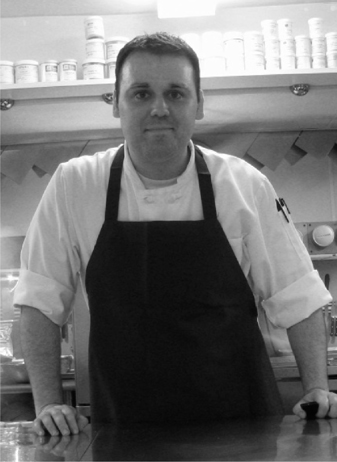
FIGURE 5. Chef Homaro Cantu. Source: Used with permission of Cantu Designs.
MAKERS MEET LIGHTWEIGHT MANUFACTURING
Lightweight manufacturing will magnify the importance of makers of the future. Within the next ten years, desktop manufacturing will allow us to “print” other products similar to the way we print ink on paper now. For example, Chicago chef Homaro Cantu offers edible menus so that customers can taste dishes before ordering them. Using special flavor-printing techniques, Cantu blends his own mixtures of fruits, meats, fish, and vegetables in a form that can be printed on paper and eaten. (See Figure 5.)
“You can make an ink-jet printer do just about anything,” says Cantu. He hopes that his idea may find its way into popular media. “Just imagine going through a magazine and looking at an ad for pizza. You wonder what it tastes like, so you rip a page out and eat it,” says the chef who is working at perfecting the flavors and has applied for a patent on the technique.3
Homaro Cantu is an edgy hybrid maker with both information technology and cooking skills. Recently he brought edible menus to a workshop we conducted in London—they were tasty, even if not an alternative to lunch. He also showed that with the right kind of printer one could send sushi through the Internet. The next generation of makers will have a new tool set available, resulting in creations that at this point are hard to imagine. Desktop manufacturing will allow us to “print” food, 3-D objects, and other products we have yet to conceive. If you can print sushi and send it through the Internet, what will makers make next? Cantu is already working on an effort to do 3-D printing of food.
A Leader with Strong Maker Instinct
Founding publisher of MAKE: Magazine and creator of the Maker Faire, Dale Dougherty is a leader of makers with a very strong maker instinct himself. Through the Maker Faire he is giving everyone the chance to meet the makers. He calls it a “world’s fair by and for the people. It’s not like institutions. It’s not big companies bringing stuff. It’s really individuals just saying, here’s what I do!”4 (See Figure 6.) Big companies can still play a role, however. For example, they often sponsor areas of the fair where makers show off what they have done with standard products. “Hacking” used to be a negative term, but the makers are recasting it. Manufacturers create products, but makers can add new life to them and even repurpose them for very different applications, if manufacturers are smart enough to listen and learn from this kind of grassroots innovation. Makers will reimagine products even if the manufacturers resist.
Physical places like TechShop will combine with virtual resources like Instructables to produce a powerful new mix of media for making.
Applying his maker instinct, his leadership instinct, and his instinct to teach, Dougherty has established the remarkable event now known as the Maker Faire. I expect more of these fairs and similar events as the maker instinct spreads do-it-ourselves wisdom throughout our business and social cultures.
FIGURE 6. Poster for Maker Faire. Source: Used with permission of O’Reilly Media, Inc.
Maker Instinct Summary
Leaders with a high maker instinct are able to approach their leadership with the commitment of a job and the playful energy of a hobby. The leaders of the future will kindle this maker energy in themselves and in others. They will make the future and connect with others in the making. Makers don’t always know the answer, but they’re working on it. Often, makers are more interested in the process of making than in what gets made at the end. For many makers, they do not want to be done making.
In times of great uncertainty, the maker instinct releases power. When leaders feel overwhelmed, they can become passive. It is much better to make something than it is to sit back and wring your hands. Leading is making.
Thank you for ordering a digital copy of this title. This will be delivered via email after checkout. Please refer to our Information About E-Books page for any further questions on formats, rights and compatible devices.
Thank you for requesting an exam copy. If you would like to request additional exam copies, please click on ‘Continue Shopping.’ Please limit your requests to not more than three books at a time. If not, please go to ‘Checkout’ and fill in your information and complete your request.