A new approach, proven in the field, for making progress on our most important and difficult collective challenges
Based on Kahane’s first-hand experiences working with teams of business, government and civil society leaders around the world
Profound, personal and practical
The two main ways that people try to solve their toughest group, community and societal problems are fundamentally flawed. They either push for what they want at all costs—in it’s most extreme form this means war—or try to completely avoid conflict, sweeping problems under the rug in the name of a superficial ”peace.” But there is a better way: combining these two seemingly contradictory approaches.
Adam Kahane argues that each is a reflection of two distinct, fundamental drives: power, the single-minded desire to achieve one’s solitary purpose; and love, the drive towards unity. They are inextricable parts of human nature, so to achieve lasting change you have to able to work fluidly with both. In fact, each needs the other. As Martin Luther King put it, “Power without love is reckless and abusive, and love without power is sentimental and anemic.”
Kahane delves deeply in the dual nature of power and love, exploring their complex and intricate interplay. With disarming honesty he relates how, through trial and error, he learned to balance between them, shifting from one to the other as though learning to walk—at first falling, then stumbling forward, and finally moving purposefully toward true, lasting reconciliation and progress.
For the last twenty years Kahane has worked around the world on a variety of challenges: economic development, food security, health care, judicial reform, peace making, climate change. He has worked with diverse teams of leaders—executives and politicians, generals and guerillas, civil servants and trade unionists, community activists and United Nations officials, clergy and artists. He has seen, up close and personal, examples of inspiring progress and terrifying regress. Power and Love reports what he has learned from these hard-won experiences.
A new approach, proven in the field, for making progress on our most important and difficult collective challenges
Based on Kahanes first-hand experiences working with teams of business, government and civil society leaders around the world
Profound, personal and practical
The two main ways that people try to solve their toughest group, community and societal problems are fundamentally flawed. They either push for what they want at all costsin its most extreme form this means waror try to completely avoid conflict, sweeping problems under the rug in the name of a superficial peace. But there is a better way: combining these two seemingly contradictory approaches.
Adam Kahane argues that each is a reflection of two distinct, fundamental drives: power, the single-minded desire to achieve ones solitary purpose; and love, the drive towards unity. They are inextricable parts of human nature, so to achieve lasting change you have to able to work fluidly with both. In fact, each needs the other. As Martin Luther King put it, Power without love is reckless and abusive, and love without power is sentimental and anemic.
Kahane delves deeply in the dual nature of power and love, exploring their complex and intricate interplay. With disarming honesty he relates how, through trial and error, he learned to balance between them, shifting from one to the other as though learning to walkat first falling, then stumbling forward, and finally moving purposefully toward true, lasting reconciliation and progress.
For the last twenty years Kahane has worked around the world on a variety of challenges: economic development, food security, health care, judicial reform, peace making, climate change. He has worked with diverse teams of leadersexecutives and politicians, generals and guerillas, civil servants and trade unionists, community activists and United Nations officials, clergy and artists. He has seen, up close and personal, examples of inspiring progress and terrifying regress. Power and Love reports what he has learned from these hard-won experiences.
Orders of 10+ copies shipping to one address receive free ground shipping
within the U.S. Shipping to separate individual addresses via USPS media mail will be applied a handling fee:
Book Details
Overview
A new approach, proven in the field, for making progress on our most important and difficult collective challenges
Based on Kahane’s first-hand experiences working with teams of business, government and civil society leaders around the world
Profound, personal and practical
The two main ways that people try to solve their toughest group, community and societal problems are fundamentally flawed. They either push for what they want at all costs—in it’s most extreme form this means war—or try to completely avoid conflict, sweeping problems under the rug in the name of a superficial ”peace.” But there is a better way: combining these two seemingly contradictory approaches.
Adam Kahane argues that each is a reflection of two distinct, fundamental drives: power, the single-minded desire to achieve one’s solitary purpose; and love, the drive towards unity. They are inextricable parts of human nature, so to achieve lasting change you have to able to work fluidly with both. In fact, each needs the other. As Martin Luther King put it, “Power without love is reckless and abusive, and love without power is sentimental and anemic.”
Kahane delves deeply in the dual nature of power and love, exploring their complex and intricate interplay. With disarming honesty he relates how, through trial and error, he learned to balance between them, shifting from one to the other as though learning to walk—at first falling, then stumbling forward, and finally moving purposefully toward true, lasting reconciliation and progress.
For the last twenty years Kahane has worked around the world on a variety of challenges: economic development, food security, health care, judicial reform, peace making, climate change. He has worked with diverse teams of leaders—executives and politicians, generals and guerillas, civil servants and trade unionists, community activists and United Nations officials, clergy and artists. He has seen, up close and personal, examples of inspiring progress and terrifying regress. Power and Love reports what he has learned from these hard-won experiences.
A new approach, proven in the field, for making progress on our most important and difficult collective challenges
Based on Kahanes first-hand experiences working with teams of business, government and civil society leaders around the world
Profound, personal and practical
The two main ways that people try to solve their toughest group, community and societal problems are fundamentally flawed. They either push for what they want at all costsin its most extreme form this means waror try to completely avoid conflict, sweeping problems under the rug in the name of a superficial peace. But there is a better way: combining these two seemingly contradictory approaches.
Adam Kahane argues that each is a reflection of two distinct, fundamental drives: power, the single-minded desire to achieve ones solitary purpose; and love, the drive towards unity. They are inextricable parts of human nature, so to achieve lasting change you have to able to work fluidly with both. In fact, each needs the other. As Martin Luther King put it, Power without love is reckless and abusive, and love without power is sentimental and anemic.
Kahane delves deeply in the dual nature of power and love, exploring their complex and intricate interplay. With disarming honesty he relates how, through trial and error, he learned to balance between them, shifting from one to the other as though learning to walkat first falling, then stumbling forward, and finally moving purposefully toward true, lasting reconciliation and progress.
For the last twenty years Kahane has worked around the world on a variety of challenges: economic development, food security, health care, judicial reform, peace making, climate change. He has worked with diverse teams of leadersexecutives and politicians, generals and guerillas, civil servants and trade unionists, community activists and United Nations officials, clergy and artists. He has seen, up close and personal, examples of inspiring progress and terrifying regress. Power and Love reports what he has learned from these hard-won experiences.
About the Author
Adam Kahane (Author)
Adam Kahane had pioneered the development and use of transformative scenario planning throughout the Americas, Europe, the Middle East, Africa, and Australia. He is a partner in the Cambridge, Massachusetts, office of Reos Partners and an associate fellow at the Saïd Business School of the University of Oxford.
Excerpt
Power and Love
1 The Two Sides of Power
TO EXPLAIN WHERE I have arrived in my understanding of power and love and social change, I have to explain how I started.
I grew up in Montreal and studied physics at McGill University. In the summer of 1981, as I was finishing my undergraduate degree, I attended a meeting of the Pugwash Conference on Science and World Affairs in Banff, Alberta, where I heard a speech about the crucial energy and environmental challenges arising out of the increasing complexity and fullness—of people and ideas and things—of the world. I decided to shift my studies from physical to social sciences, and I went on to do a graduate degree in economics and public policy at the University of California at Berkeley. After graduation, I worked at a variety of research institutions in North America, Europe, and Asia, and then in the corporate planning department of Pacific Gas and Electric Company in San Francisco.
My father had taught me the value of industriousness—of doing my job well, whatever that job was—and of self-determination and self-improvement. His favorite story was of Henry David Thoreau, who had lived in the woods at Walden Pond and after two years had come out with his axe sharper than when he had gone in.
I was young and ambitious and keen to make my mark on the world.
GENERATIVE POWER
In 1988, when I was twenty-seven years old, I moved from San Francisco to London to take a job in the global strategy department of the energy company Royal Dutch Shell. What I loved most about working for Shell was the power. I enjoyed getting the diplomatic memos: “The government of Côte d’Ivoire has reiterated their request that we desist from referring to them as the Ivory Coast.” I once got a mistaken phone call asking me where a $300 million payment for a fuel oil delivery should be deposited. I liked Shell’s practical role in providing the world with energy: the company invested hundreds of millions of dollars a year in research and development, drilled for oil thousands of feet underwater, and produced fuels by heating oil sands and cooling natural gas. I reveled in being a small cog in this big and important machine.
I was at Shell at the height of capitalist confidence. The Berlin Wall had just fallen, the Internet boom was starting, Francis Fukuyama had published “The End of History,” Tom Wolfe was writing about Manhattan financiers as “Masters of the Universe,” and Margaret Thatcher was pronouncing that “There Is No Alternative” to the Anglo-American free enterprise model. The dominant cultural meme was that in all spheres—economic, political, social, legal, international, intellectual—a contest among competing powers produced the best outcome.1 From my office in a London skyscraper, it seemed to me that if everybody just did their job and pushed forward their part—engaged in civilized, manly jostling—the whole would grow and prosper.
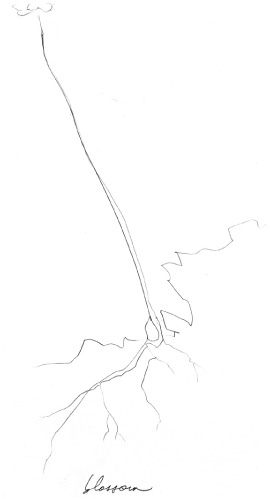
My experience at Shell, and elsewhere in the world of business, was of an almost single-minded emphasis on the pragmatic use of power—the kind of power that a former physics student could recognize. It seemed to me that businesspeople understood power the same way Martin Luther King Jr. did: “Power properly understood is nothing but the ability to achieve purpose.”2 Their actions seemed to accord with Paul Tillich’s explanation of power’s generative root: “the drive of everything living to realize itself, with increasing intensity and extensity.” This drive can be seen in the force of a growing seed: the force that “guerrilla gardeners” employ to turn vacant urban lots into parks, when they surreptitiously plant seeds that break through the concrete.
At Shell I could see how my own drive for self-realization, along with that of my colleagues, produced furiously competitive intellectual creativity and growth. The head of our department, Arie de Geus, wrote a book called The Living Company. This helped me also see how the company’s living drive for self-realization, along with that of other companies, produced furiously competitive commercial creativity and growth.3
In all of this I saw the generative aspect of power: the universal drive to “get one’s job done.” Power expresses our purposefulness, wholeness, and agency. Although power is the drive to realize one’s self, the effect of power goes beyond one’s self. Power is how we make a difference in the world; it is the means by which new social realities are created. Without power, nothing new grows.
At Shell I was head of the strategy group that constructed scenarios—plausible alternative stories—of social-political-environmental contexts in which the company might find itself. In 1991, Pieter le Roux, a professor at the left-wing University of the Western Cape in South Africa, contacted me because he wanted to use the Shell methodology to help a group of South African opposition leaders develop a strategy for effecting the transition away from apartheid. Nelson Mandela had just been released from twenty-seven years in prison, and the negotiations between the opposition and the white minority government had started in earnest. Le Roux’s project sounded interesting and worthwhile to me, and my Shell bosses were happy, after years of being vilified for not having divested from South Africa, for the opportunity to rebuild the company’s relationships with the opposition. So in September 1991, I traveled to Cape Town to facilitate the first workshop of what became known as the Mont Fleur Scenario Exercise.4
What I found exhilarating in meeting these leaders—from political parties, trade unions, community organizations, universities, and companies—was their powerful purposefulness. Every one of them was committed to addressing, from their particular idological and institutional base, South Africa’s tough challenges, and they had already realized that they could be successful only if they worked together. White businessman Johann Liebenberg later remembered, with surprise and pleasure, his conversations with the black leaders who had hitherto been his adversaries: “This was new to me, especially how open-minded they were. These were not people who simply said: ‘Look, this is how it is going to be when we take over one day.’ They were prepared to say: ‘Hey, how would it be? Let’s discuss it.’”5 I felt excited to play a part in this important social change process.
What I saw in these workshops, and through the window they provided me onto the dynamics of South Africa’s extraordinary transition, changed my understanding of what was possible in the world. I saw that a team of leaders from across a social system could, even in the most complex, conflictual, and challenging of contexts, exercise their power collectively to change that system for the better. I was inspired by what I was learning about this generative power.
What I saw also changed my understanding of what was possible for me. I saw that I had a job to do—a way of making a difference in the world—in supporting such teams. In 1993, I resigned from Shell and moved to South Africa. Since then I have been doing this kind of work there and elsewhere.
DEGENERATIVE POWER
How do we come to notice something that we are not noticing? I was once working in my office, and my sunglasses were in my shirt pocket. I went into a dark closet and leaned over to pick up some supplies near the floor, when I heard a sound that I couldn’t place. As I went out, I unconsciously filed away that anomalous event—the unexplained sound—and went back to what I was doing. Later I saw that I had misplaced my sunglasses and began looking all around for them. Then I remembered the unexplained sound and realized it had been the sound of my sunglasses falling out of my pocket onto the closet floor.
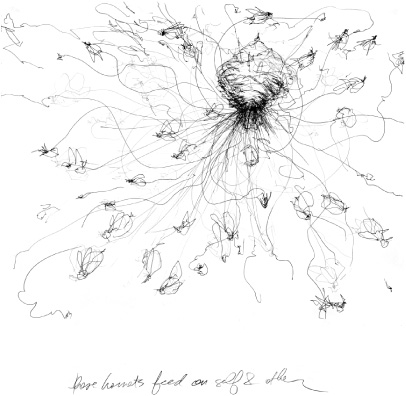
During the first years after I left Shell and started working as a facilitator of social change teams, I kept hearing sounds of a second kind of power that I didn’t know how to interpret. My first interpretation of what had happened at Mont Fleur— the interpretation that I was working from—was that the team had decided that their power, their drive to realize themselves as individuals and as a nation, could more effectively be exercised working with rather than against one another. They had used four bird images to summarize their shared understanding of the different ways the future of the nation might unfold: an “Ostrich” scenario of white denial, a “Lame Duck” scenario of an overconstrained new black government, an “Icarus” scenario of the new government flying too high too fast, and a “Flamingos” scenario of rising slowly together. But when Pallo Jordan, one of the intellectual leaders of the African National Congress, heard these scenarios presented at a party meeting, he thought they were ridiculously naïve about the essentially violent dynamics of power in the South African context. “What is all this about ducks and flamingos?” he asked incredulously. “The only birds that matter here are hawks and sparrows!”
It is not surprising that Jordan and I had different perspectives on power. I came from a peaceful and unfettered background, and I had encountered South Africa for the first time in 1991, one year after the hopeful transitional negotiations had started and several years after the hopeless, violent clashes between the government and the opposition in the 1970s and 1980s. Jordan is black, which in apartheid South Africa means he grew up as a second-class person. He had spent decades in exile working for the African National Congress and had only just returned to the country to engage directly in these tough negotiations. Power looks different to people who have to struggle for it.
Now I realized what I had been hearing: power has two sides. The generative side of power is the power-to that Paul Tillich refers to as the drive to self-realization. The degenerative, shadow side is power-over—the stealing or suppression of the self-realization of another. Tillich recognizes both sides: “Power actualizes itself through force and compulsion. But power is neither the one nor the other. It is being, actualizing itself over non-being. It uses and abuses compulsion in order to overcome this threat. It uses and abuses force in order to actualize itself. But it is neither the one nor the other.”6 Power-over abuses force and compulsion to suppress or oppress or dominate another.
Like Pallo Jordan, my wife Dorothy is black and grew up in South Africa and was involved for years in the anti-apartheid struggle. When later we visited Guatemala together, she noticed something that I didn’t. The position of aboriginal people there reminded her of blacks in South Africa: they were treated as if they were invisible. Not to see another person, or to see her or him as a nonperson, is the extreme manifestation of power-over.
The most common understanding of power is as power-over. When Stephen Lukes, a professor of politics and sociology at New York University, wrote his classic 1974 book Power: A Radical View, he equated power with domination. But thirty years later, in the second edition, Lukes revised his view: “It was a mistake to define power by saying that ‘A exercises power over B when A affects B in a manner contrary to B’s interests.’ Power as domination is only one species of power.”7 Power-over is a subset of power-to.
Degenerative power-over arises out of generative power-to. When I am exercising my power-to and I feel myself bumping up against you exercising yours, and if in this conflict I have the capacity to prevail over you, then I can easily turn to exercising power over you. My drive to realize myself slips easily into valuing my self-realization above yours, and then into believing arrogantly that I am more deserving of self-realization, and then into advancing my self-realization even if it impedes yours.
Many whites in South Africa valued their self-realization above that of others, and they deployed an ideology—apart-heid—to justify their behavior. We can see analogous dynamics across races or ethnic groups or classes or genders in every society. Thus, the seductively beautiful face of power-to morphs, as in a horror movie, into the viciously terrible face of power-over.
Once I had seen the two sides of power starkly in South Africa, I could recognize them more easily elsewhere. After I left Shell, I consulted to several companies and business associations in Houston, Texas. I found the business culture of Houston unusual and fascinating. The businesspeople there were unconstrained in their enthusiasm for independent, unregulated, entrepreneurial power-to. The can-do property developers I met owned private companies with names like “John Smith Interests,” which I understood to represent an unabashed celebration of the advancing of an individual’s own interests and power.
These same businesspeople were also enthusiastic in their support for voluntary philanthropy and civic engagement. They were more aware than people I had met elsewhere of their role in the evolution of their social reality. Houston had grown from being the twenty-first largest city in the United States in 1940 to fourth largest in 1990. It had become what it was not by accident, but as the result of the intentional decisions made by people such as themselves, and they felt a responsibility to continue this public work. The ideology of Houston businesspeople promoted individual self-realization in alignment with collective self-realization.
In this community, the very epitome of power-to was Ken Lay, the founder and chairman of Enron, the $100 billion natural gas, electricity, and telecommunications company. Enron had been named “America’s Most Innovative Company” by Fortune magazine six years in a row, and Lay was admired as an entrepreneurial genius. At Shell, young staff who considered themselves to be sophisticated strategists were in awe of Enron’s deal making. The company was one of Houston’s biggest employers and charitable donors, and it had sponsored a popular new downtown stadium. When Lay visited our Houston workshops, the other business leaders treated him like a god. Lay symbolized the virtues of the free marketeer whose unfettered power-to produced both private wealth and public good.
In 2001, I chaired a Business Leaders’ Dialogue at the Aspen Institute in Colorado. Among the participants, who included international corporate, government, trade union, and nonprofit leaders, Lay was the star whom everyone wanted to meet. By this time, stories about Enron’s malfeasance were beginning to circulate. The most prominent accusation against Enron was that it had illegally manipulated California’s electricity market, and California attorney general Bill Lockyer was calling for Lay to be prosecuted.
Lay’s way of participating in our meeting was striking. He moved in and out of the sessions, which we had all agreed not to do and which no one else did. He seemed to hold himself apart from or above the group. He was the only dissenter from the group’s conclusion that corporate social responsibility should be enforced rather than left voluntary. The only time he participated passionately was when, with righteous indignation, he told the story about Lockyer having threatened him by saying, “I would love to personally escort Lay to an 8-by-10 cell that he could share with a tattooed dude who says, ‘Hi, my name is Spike, honey.’”8
During these sessions, only one other participant, a trade unionist, ever challenged Lay. Everyone else conspicuously deferred to him. I thought that if Lay was so powerful and wealthy, he deserved to be looked up to, and also that if I was polite to him, I might benefit from his largesse.
One year after the Aspen Institute meeting, Enron declared bankruptcy, and five years After, Lay was found guilty of ten charges of fraud and conspiracy. The company’s collapse wiped out more than $60 billion in shareholder investment and 6,000 employee jobs, and led to the dissolution of Arthur Andersen, its auditor.
Exercising creative, entrepreneurial, profitable power-to is not hard if you pretend, and are allowed to pretend, that you live in an unregulated terra nullius. But Lay and his Enron colleagues did not live in such an empty world, and in defrauding millions of people, they severely undermined those people’s power-to. Lay’s emphatic rejection of rules that govern the collective, as manifested in his disinterest (enabled by our deference) in the small matter of our meeting’s ground rules and the larger matter of U.S. law, illustrated his disconnected, degenerative power-over.
The irresponsible power-over exercised by Enron executives foreshadowed the global financial collapse of 2008. Business journalist Mark Haines was flummoxed when the crisis broke: “We assume that the individual pursuing his or her own best interest will result in the maximum benefit for society as a whole—and that certainly has to be questioned now.”9 The understanding that I had imbibed in London twenty years earlier—that a system driven by the power-to of the parts would produce a beneficial result for the whole—was tragically incomplete and inadequate. Before this became apparent, however, I was to have other experiences that led me to my current understanding of degenerative power.
When, after Mont Fleur, I had started working on different tough challenges in different countries—power-over manifesting in inequity and inequality—I carried with me a certain confidence that I came from a country, Canada, that had successfully overcome its own such challenges. So in 2003 I was taken aback to find myself in a conference room at the Department of Justice in Ottawa, Ontario, listening to a group of leaders of government, business, and aboriginal (Native or First Nations) organizations talk about their encounters with the realities of aboriginal people in Canada.
As we went around the table and heard each person’s story— of extraordinarily high levels of poverty, addiction, and suicide; decades of abuse by “well-intentioned” governments and churches; conflicts over the extraction of oil and other natural resources; thousands of stuck land and treaty disputes— it became obvious to me that I did not come from a country that had successfully overcome such challenges. My colleague Ursula Versteegen says that our most important learnings come not simply when we see the world anew, but specifically when we see ourselves—and our role in creating the world—anew.10 On that day I saw that I was part of a society that was exercising a terrible power-over.
One aspect of this Canadian situation was the widely held mental model that aboriginal people needed to “be developed.” This model had been institutionalized in, among other practices, a policy of aggressive assimilation that since the 1850s had taken children away from their parents to be educated in church- and state-run residential schools. One of the founders of residential schooling in North America characterized his approach as “kill the Indian and save the man.”11 Residential schooling created a legacy of physical, emotional, sexual, and cultural abuse. By the time the last residential school in Canada closed in 1998, this power over aboriginal people had been replicated for generations.
After this meeting in Ottawa, I and a few colleagues began working with a team of national government and aboriginal leaders to try out a new way to unstick this stuck situation. We chose as our entry point the extraordinarily high rate of suicide among aboriginal youth: five times the Canadian average. But after four years of on-and-off efforts, we had hardly moved forward at all. We kept running into roadblocks, large and small. At one point we were frustrated in trying to communicate with the staff of an aboriginal-run conference center. I complained about this to my friend, activist Michel Gelobter, and he chided me: “Why are you surprised that oppressed communities exhibit serious dys-functions? These dysfunctions have to be recognized and dealt with; they reinforce and maintain oppression by diminishing the capacity of these communities to heal.” The degenerative impacts of power-over are resolutely persistent.
I also noticed that within our microcosmic project team, we succeeded in re-creating the stuck relationships that characterized the macrocosm we were trying to change. The government leaders wanted to remain in control and to “fix” the aboriginal problem. The aboriginal leaders didn’t want to be controlled or fixed or developed by anyone. And those of us who were consultants dispassionately kept ourselves apart from and above the situation. We all had our own different roles and powers and trajectories of self-realization, which never really moved and never really met. So we made no progress on the challenge that we had set out to address. (Only later, when these roles and power relations were forcefully restructured and ownership of the project was taken over by a local aboriginal community, did the initiative begin to move forward.)
In Canada, as in South Africa and Houston, I had been able to recognize the sound of power-to more easily than the sound of power-over because the former resonated more strongly with my own privileged experience. Then in 2004 I got a taste of the experience of the underside of power-over. My London partner Zaid Hassan and I were invited to facilitate a workshop in Michigan for a group of U.S. minority activists who were rethinking their strategy for achieving racial equity in light of the just-issued Supreme Court decision that sharply limited affirmative action.
I was unsettled even before the meeting started. Zaid is Muslim and I am Jewish, and on the plane ride he had shown me an article in an activist magazine that pointed out how many of the U.S. neoconservatives are Jewish. He also showed me a letter to the editor that he had written, in which he acknowledged how contentious this assertion was but defended it as informative and fair. We started into a tense discussion, a fractal of the larger Muslim-Jewish conflict, but then cut short our argument to get ready for the workshop.
With this unresolved tension between Zaid and me, the workshop started awkwardly and got worse. The participants were feeling beaten down by the regression in civil rights in the United States and discouraged about the poor results their existing strategies were producing. They didn’t think my leadership of the meeting, with my white and foreign colleagues, was legitimate, and they were unhappy with the process we were using. Harsh power struggles swirled around and within the room. Eventually it became obvious that I wasn’t wanted in the workshop at all, and so, feeling humiliated, I gave up. I left the group to lead itself and went back to my room.
That night I had a terrifying dream. A gang was harassing me mercilessly—crowding and shoving and hitting me—and I couldn’t escape. Eventually I became so hopeless and despairing that I pulled the pin out of a hand grenade and blew myself up with all of them: I became a suicide bomber. Through this dream I experienced the terrible, debilitating feeling of being on the receiving end of power-over.
By 2008, my understanding of the dynamics of power and love was taking shape through such experiences and reflections. Then I had another encounter with aboriginal issues, this time in Australia. I was invited to Melbourne by an Australian aboriginal leader named Patrick Dodson. He is well known for his decades of varied struggles—mobilizations, negotiations, invocations, lawsuits—to address the challenges faced by his people, and specifically for his efforts to achieve reconciliation between aboriginal and nonab-original Australians.12 He knows how hard it is to move forward on these challenges and wasn’t surprised by the lack of progress of the effort in Canada in which I had been involved.
Dodson wanted me to contribute to a meeting that he was convening with John Sanderson, the former chief of the Australian Army. They were trying to construct a new set of agreements (including constitutional amendments) that would, more than 220 years after the arrival of the settlers and 15 years after the High Court verdict that overruled terra nullius, put the relationship between these two peoples on an equal footing.
The evening before our meetings were to start, I walked by an outdoor cinema and found myself watching two documentaries. The first was The White Planet, a film about arctic wildlife and the dangers it faces from global warming.13 The second was Kanyini, about an Australian aboriginal leader named Bob Randall, a member of the “Stolen Generation” who as a child had (like many Canadian children) been taken away from his family by the government.14 In Kanyini, Randall argues that the crisis in aboriginal society originated in their having been dispossessed and estranged from the four aspects of life that are essential to survival: their belief system or law, their land or country, their spirituality, and their families. “The purpose of life is to be part of everything that is,” he says in the film. “You take away my kanyini, my interconnectedness, and I’m nothing. I’m dead.” I was struck that Randall’s yearning was the same as Paul Tillich’s love: “the drive towards the unity of the separated.”
In the juxtaposition of these two films, I could now see what happens when we employ our power without love. Our destruction of aboriginal societies worldwide and our headlong rush towards the destruction of the ecosystems on which all our societies depend arise from our disconnection from one another and from the earth. Environmentalist Julia Butterfly Hill made the same point in describing her unlikely partnership with social activist Van Jones: “I brought the piece that we are not separate from the planet. His piece was that we need to uplift everyone. We were committed to seeing how those pieces fit together. We could see underneath all of it was the idea of disposability: the idea that you’ve got disposable people, a disposable planet.”15 If we push away or abandon our sense of connection with others— our acknowledgment, our sensitivity, our love—there is no limit to the sadness, terror, and pain that our unchecked power can produce.
We can recognize this degenerative phenomenon of power without love because, in so many contexts and at so many scales, power dominates love. We see this in our homes, organizations, communities, nations, and in international affairs. Patrick Dodson told me a story about Michael Long, a popular Australian aboriginal sportsman who had walked from Melbourne to Canberra to draw attention to the desperate situation of his people. Long met with Prime Minister John Howard and asked him the anguished question: “Where is the love for my people?” We all feel the anguish that results from the deficit of love.
LOVE IS WHAT MAKES POWER GENERATIVE
Based on these experiences, then, here is how I understand the nature of power and its relationship to love. Power has two sides, one generative and the other degenerative. Our power is generative and amplifying when we realize ourselves while loving and uniting with others. Our power is degenerative and constrain-ing—reckless and abusive, or worse—when we overlook or deny or cut off our love and unity.
Thank you for ordering a digital copy of this title. This will be delivered via email after checkout. Please refer to our Information About E-Books page for any further questions on formats, rights and compatible devices.
Thank you for requesting an exam copy. If you would like to request additional exam copies, please click on ‘Continue Shopping.’ Please limit your requests to not more than three books at a time. If not, please go to ‘Checkout’ and fill in your information and complete your request.